
 Beach Tours
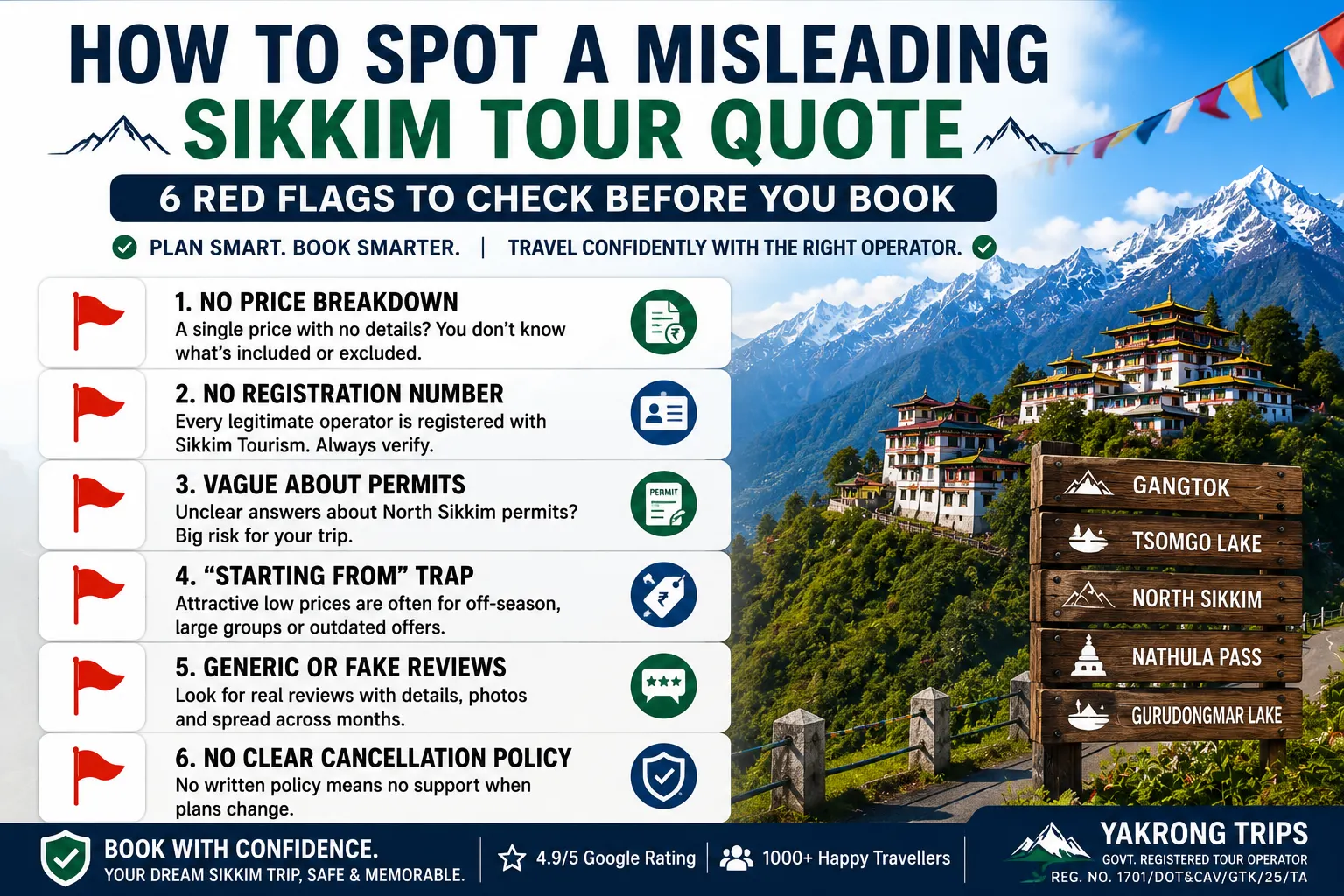
How to Spot a Misleading Sikkim Tour Quote: 6 Red Flags to Check Before You Book
Sikkim has become one of India’s most in-demand mountain destinations, and with that demand has come a flood of tour operators – some excellent, some cutting corners in ways that only become obvious once you’re already at a checkpoint short one permit, or standing in a hotel room with no heater in December.
Most of the disappointment we hear about after the fact traces back to the quote stage – a number that looked great on WhatsApp but didn’t hold up once the trip actually started. Here are the seven things worth checking before you hand over an advance to anyone
1. A Price With No Breakdown
If a quote is just a single number – “₹14,999 for 5N/6D” – with no line-by-line breakdown of accommodation category, vehicle type, meals, and permits, you have no way to know what you’re actually paying for. A genuine operator can tell you exactly what’s included in ten seconds, because they’re working from a real cost sheet, not a headline price built to look attractive in an ad. (We’ve written a full breakdown of what a Sikkim trip should actually cost if you want numbers to compare against.)
What to ask: “Can you break this down by hotel category, vehicle, and what’s excluded?” A legitimate operator will answer immediately.
2. No Registration Number
Tour operators in Sikkim are required to register with the Department of Tourism, and legitimate operators display this number openly – usually in the footer, About page, or directly when asked. If an operator can’t produce a registration number, or gets vague when you ask for one, that’s a serious red flag, especially for North Sikkim itineraries where permits are processed through your operator’s registration.
What to ask: “What’s your Sikkim Tourism registration number?” and cross-check it if you’re unsure.
3. Vague Answers About North Sikkim Permits
North Sikkim (Lachen, Lachung, Gurudongmar, Yumthang) requires a Restricted Area Permit that can only be processed through a registered operator – this isn’t optional and isn’t something you can arrange yourself. If an operator is unclear about how permits are handled, when they’ll be ready, or what happens if one gets delayed by weather, that’s a sign they either don’t have real experience with the route or aren’t being upfront about the process.
What to ask: “How and when do you process the North Sikkim permit, and what’s the backup plan if it’s delayed?”
4. “Starting From” Prices With No Fixed Departure Dates
A price advertised as “starting from ₹X” often applies only to a specific low-season date, a larger group size, or a bare-minimum hotel category that isn’t actually offered anymore. If a quote can’t be pinned to your actual travel dates and group size within one or two messages, the number isn’t really meant to be booked – it’s meant to get you to click.
What to ask: “Can you confirm this exact price for my specific dates and number of travellers?”
5. No Reviews, or Reviews That Feel Generic
A handful of five-star reviews with no specifics (“Amazing trip! Highly recommend!”) posted all around the same date is a common pattern for inflated review pages. Genuine review histories build up gradually and usually mention specific things – a driver’s name, a particular hotel, a detail from the itinerary. It’s worth spending two minutes reading a spread of reviews rather than just the star rating.
What to check: Look for reviews spread across different months, mentioning specific guides, drivers, or hotels by name.
6. No Clear Cancellation or Rescission Policy
Weather closures, permit rejections, and road conditions are a normal part of Himalayan travel – they’re not really anyone’s fault. What separates a trustworthy operator from a risky one is having a clear, written policy for what happens when a route closes: do they rebook you on an alternate day, offer a partial refund, or leave you to sort it out? If this isn’t addressed before you pay an advance, ask directly.

What to ask: “What’s your policy if a permit gets rejected or a road closes due to weather?”
Frequently Asked Questions
Is it safe to book a Sikkim tour without meeting the operator in person?
Yes, most travellers book remotely via WhatsApp or email – this is completely normal. What matters is verifying registration, checking reviews, and getting a written itemised quote before paying an advance, not whether you meet in person.
How much advance is normal for a Sikkim tour booking?
This varies by operator, but a reasonable advance is generally used to lock in hotel and permit processing, not the full trip cost upfront. Be cautious of any operator asking for 100% payment well before your travel dates.
Can I verify a tour operator’s Sikkim Tourism registration myself?
Yes – ask for the registration number directly and, if in doubt, you can inquire with the Sikkim Tourism Department to confirm it’s valid and active.
What should I do if my North Sikkim permit gets rejected close to my travel date?
A good operator will have an alternate plan ready – rerouting to accessible areas or adjusting your itinerary – rather than simply cancelling. This is one of the clearest indicators of real local experience.
Booking With Confidence
None of this is about being suspicious of every operator – most are genuinely trying to give you a good trip. It’s about knowing what a real, complete quote looks like so you can tell the difference quickly.
At Yakrong Trips, we’re a government-registered operator (Registration No. 1701/DoT&CAv/GTK/25/TA) with a 4.9/5 Google rating from real travellers, and every quote we send is itemised the same way this checklist describes – no vague numbers, no surprise charges at checkpoint or checkout. If you’d like a transparent, line-by-line quote for your dates, message us on WhatsApp.


